ISO 9001 Certified | Precision Laser Systems for 90+ Countries Request a Consultation

Trotec Laser Processing Solutions

Application-specific laser configurations validated through rigorous testing. Our specialists optimize parameters for your materials, tolerances, and throughput requirements.

Laser engraving applications

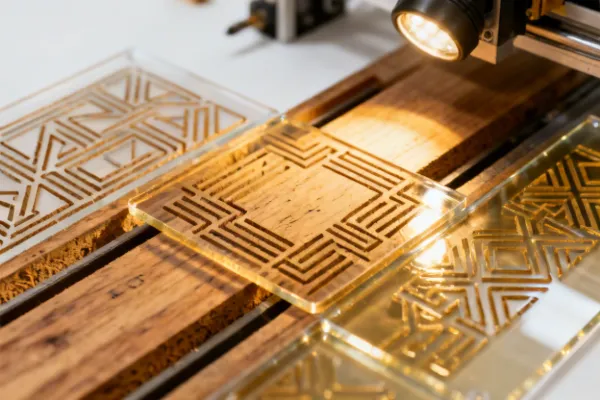
Laser Engraving

High-resolution engraving across organic and synthetic substrates. Our CO2 and fiber laser platforms achieve detail resolution down to 1,000 dpi on materials including wood, acrylic, glass, leather, and anodized aluminum. Each material requires distinct focal length and power density parameters that our application engineers calibrate during pre-deployment testing.

Validated Materials

  • Wood and MDF (0.5-25mm depth control)
  • Acrylic and PMMA (flame-polished edges achievable)
  • Glass and crystal (sub-surface engraving capable)
  • Leather and textiles (non-contact processing)
  • Anodized aluminum and coated metals
Discuss Your Application
Laser cutting applications

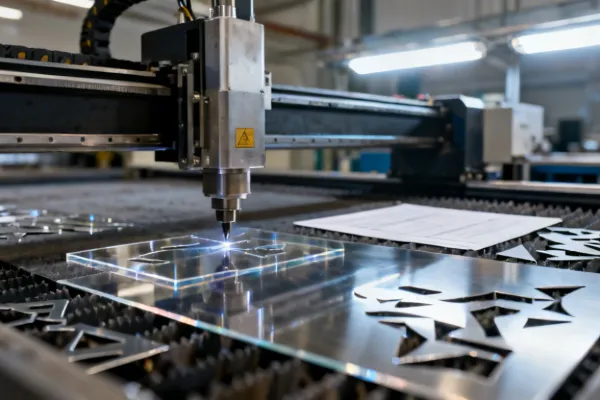
Laser Cutting

Clean, burr-free cutting with minimal heat-affected zones. Our systems deliver kerf widths as narrow as 0.1mm, enabling intricate geometry cuts that mechanical methods cannot replicate. Closed-loop power monitoring ensures consistent cut quality across extended production runs.

Processing Capabilities

  • Acrylic cutting up to 25mm with polished edges
  • Wood and plywood up to 20mm (material dependent)
  • Textiles and technical fabrics (sealed edges)
  • Paper and cardboard (high-speed die-less cutting)
  • Thin metals with fiber laser option
Discuss Your Application
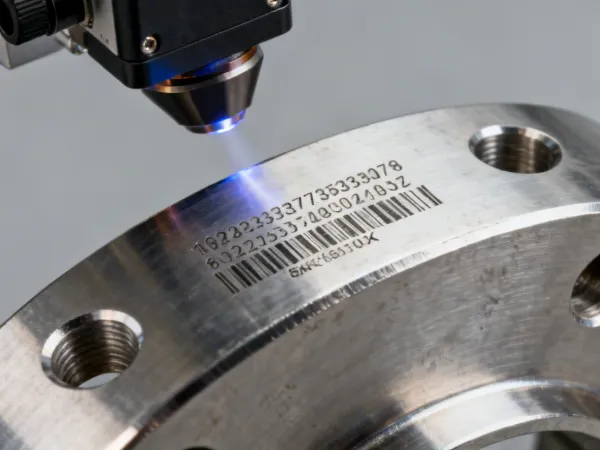
Industrial laser marking on metal components

Industrial Laser Marking

Permanent, high-contrast marks for traceability, branding, and regulatory compliance. Our SpeedMarker fiber laser systems produce marks that withstand chemical exposure, abrasion, and extreme temperatures. Mark quality remains consistent from the first part to the ten-thousandth.

Mark Types

  • Annealing marks on stainless steel (no material removal)
  • Deep engraving for tool identification
  • High-contrast marks on plastics and polymers
  • Data Matrix and QR codes (machine-readable verification)
  • Day/night design marking for backlit components

Compliance Standards Supported

UDI (Unique Device Identification), automotive VIN marking, aerospace part traceability per AS9100, and pharmaceutical serialization requirements.

Schedule a Marking Assessment

Industry-Specific Configurations

Our application engineers maintain dedicated parameter databases for each industry vertical, reducing deployment time and ensuring first-run accuracy.

Signage & Display

High-throughput processing of acrylic, wood, and composite panel materials. Optimized cutting parameters eliminate post-processing for edge-lit signage applications. Average setup time: under 15 minutes per new material.

Electronics & PCB

Precision depaneling, conformal coating removal, and component marking. Our UV and fiber laser options achieve spot sizes down to 20 microns for sensitive electronic substrates without thermal damage to adjacent components.

Packaging & Labels

High-speed die-less cutting and perforation of flexible packaging materials. Laser processing eliminates mechanical die wear and enables rapid changeover between designs, with typical cycle times under 2 seconds per unit.

Medical Devices

UDI-compliant marking on surgical instruments and implants. Our processes meet FDA 21 CFR Part 11 requirements. Corrosion-resistant annealing marks maintain biocompatibility of stainless steel surfaces.

Automotive

Part identification marking, interior trim processing, and dashboard component engraving. Our systems integrate with MES platforms for automated serial number assignment and quality data logging.

Awards & Personalization

Photo-quality engraving on glass, crystal, wood, and metals. Variable data processing enables batch-of-one production with consistent quality across diverse material substrates and geometries.

Documented Application Results

Verified outcomes from production deployments. Each case includes the specific system configuration, material parameters, and measurable results achieved.

Medical Device Manufacturing

UDI Marking on Titanium Surgical Instruments

Client: Ortho-Kinetics Medical, San Diego, CA (orthopedic implant and instrument manufacturer, 340+ employees)

Challenge: The client needed to comply with FDA UDI requirements (21 CFR Part 801) by marking Data Matrix codes on Grade 5 titanium (Ti-6Al-4V) surgical instruments. Previous attempts with dot-peen marking caused micro-cracks visible under 20x magnification, raising biocompatibility concerns. The marks also degraded after 50+ autoclave cycles at 134°C.

Solution: Trotec SpeedMarker 700 with 50W fiber laser. Annealing parameters were developed in our application laboratory over a two-week testing period: 800mm/s scan speed, 80% power, 40kHz frequency, 6 passes. This produced a sub-surface oxide layer mark with zero material removal.

Results: Data Matrix codes maintained Grade A readability (per ISO/IEC 15415) after 500+ autoclave cycles. Processing time: 1.8 seconds per instrument. 180,000+ instruments marked since installation in Q3 2021 with zero readability failures. The annealing process passed the client's internal biocompatibility validation per ISO 10993-5.

Commercial Signage

High-Volume Acrylic Processing Migration

Client: BrightSign Displays Ltd, Birmingham, UK (commercial signage fabricator, serving retail and hospitality sectors since 2006)

Challenge: The client operated two Chinese-manufactured 80W CO2 laser cutters purchased in 2016 for £4,500 each. Edge quality on 5mm clear acrylic was inconsistent—requiring manual flame polishing on approximately 35% of cut edges. Machine downtime averaged 6 hours per month for optics replacement and alignment.

Solution: Single Trotec Speedy 400 with 80W CO2 source, installed in March 2019. The Ruby material database provided pre-validated parameters for 12mm acrylic that the client had previously spent weeks optimizing manually.

Results: 22% throughput increase on complex geometry signage jobs attributed to the 5.1G acceleration reducing idle time between cuts. Flame-polishing requirement dropped from 35% to under 4% of cut edges. Optics cleaning interval extended to 60+ hours versus 20-25 hours on previous systems. Three-year total cost of ownership was 12% lower than continuing to operate both previous machines, accounting for energy, consumables, maintenance, and operator time.

Need Application-Specific Guidance?

Submit your material samples and application requirements for a documented feasibility assessment. Testing is performed at no charge in our regional application laboratories, and results include optimized parameters, edge quality photographs, and an honest evaluation of whether laser processing is the right method for your application.

Request Application Assessment